Dr Samuel Browne (1809–1890)
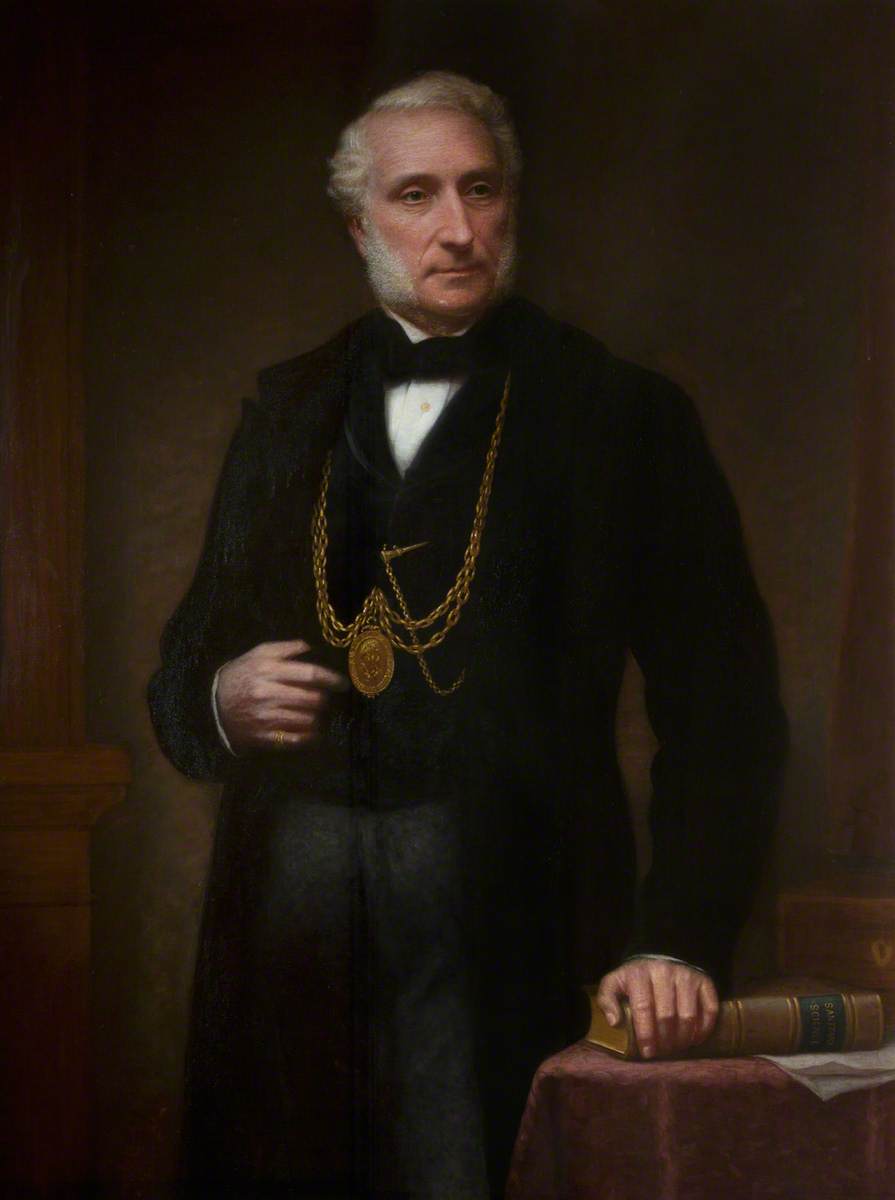
Dr Samuel Browne (1809–1890) was one of Belfast's most distinguished nineteenth-century physicians, a pioneering ophthalmic surgeon and a key figure in the town's public health history. Born in 1809, he was educated in Dublin, Glasgow and London, qualifying as a member of the King's and Queen's College of Physicians in Ireland and the Royal College of Surgeons of England. He served for a period in the Royal Navy before settling in Belfast, where he established himself as both a general practitioner and ophthalmic surgeon, becoming the first doctor in the town to specialise in diseases of the eye.
In 1845, with the financial support of Sir William and Lady Johnston, Browne founded Belfast's first Ophthalmic Institution at 35 Mill Street, introducing ophthalmology as a distinct branch of surgery. The institution's success was recognised by the Belfast Sanitary Committee, which granted Dr Browne a subsidy. The practice later moved to Donegall Square Mews (1858) and then to Howard Street (1861), where attendance reached approximately one thousand patients a year. Browne also lectured on ophthalmic surgery and published numerous works on diseases of the eye, helping to establish the speciality in Ireland. His son, Dr J. Walton Browne, later joined the practice and became senior surgeon to the Belfast Royal Hospital.
Throughout a career spanning almost fifty years, Browne held numerous important medical appointments. He served as attending surgeon and later consulting surgeon to the Belfast Royal Hospital (later the Royal Victoria Hospital), surgeon to the Belfast Hospital for Sick Children, surgeon to the Ophthalmic Hospital, and ultimately medical superintendent and medical officer of health for the Borough of Belfast. He was elected President of both the Belfast Medical Society (1857–58) and the Clinical and Pathological Society (1858–59) and was a member of the Irish Medical Graduates Association.
Browne was equally prominent in Belfast's civic life. He served as a Justice of the Peace and was a long-serving member of Belfast Town Council, elected Mayor of the town in 1870, eighteen years before it became a city. In his role as consulting sanitary officer, he was a vocal and tireless advocate of sanitary reform. Alongside his colleague Dr Malcolm, Browne established the first Belfast Sanitary Committee. His system of house-to-house inspections during the cholera epidemics of the 1840s and 1850s proved instrumental in preventing much more excessive mortality, and he repeatedly used his public positions to campaign for improved housing conditions, better drainage, and adequate washing facilities for the town's rapidly growing population. He died on 26 August 1890 at the age of eighty-one while still in office as Medical Officer of Health, showing his dedication to the improvement of Belfast public health to the very end of his life.
Contemporaries regarded Browne as one of Belfast's most respected public figures. Following his death, the Belfast Newsletter described him as having been 'one of the most prominent figures in the public and professional life of Belfast for half a century,' while noting that his 'fine presence, courteous manners, and high character' earned him 'the respect and admiration of all his fellow citizens.' Further tributes described him as a model surgeon, a dignified mayor, a respected citizen, and a perfect gentleman, a fitting description of a dedicated physician and reformer whose legacy left a lasting influence on ophthalmic medicine, public health and municipal government in nineteenth century Belfast.
Further Reading
"Naval and Military Medical Services." British Medical Journal 2, no. 1548 (1890): 530–32. http://www.jstor.org/stable/20240179
"Death of Dr. Samuel Browne, R.N., J.P." Belfast News-Letter, 26 August 1890.
Allison, R. S. A Short History of the Development of Ophthalmological and Otorhinolaryngological Services in Belfast (1801–1964). Belfast: Baird, 1969.
Browne, Samuel. "On the Progress of Sanitary Inquiry in Belfast." In Transactions of the National Association for the Promotion of Social Science, 555–60. London: Longmans, Green, Reader and Dyer, 1868.
Clarke, Richard. "Ulster Connections with Nelson and Trafalgar." Ulster Medical Journal 75, no. 1 (2008): 80–84.
Esler, Robert. "Sketch of the Ulster Medical Society and Its Presidents." In Transactions of the Ulster Medical Society, Session 1885–86, 1–24. Belfast, 1886.
Farrell, Nigel. "Asiatic Cholera and the Development of Public Health in Belfast 1832–1878." Unpublished Ph.D dissertation, University of Ulster, 2014.
McIntosh, Gillian. "Symbolising the Civic Ideal: The Civic Portraits in Belfast Town Hall." Urban History 35, no. 3 (2008).
© Dr Nigel Farrell — This work is shared for research and educational purposes. Any reuse, quotation, or reproduction must include appropriate academic attribution to the author. The content may not be redistributed commercially without permission. Full licence details →