Dr Henry McCormac (1800–1886)
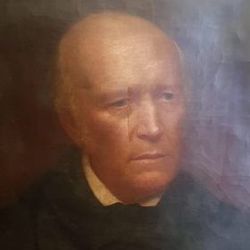
Few Belfast physicians left as profound or consequential a mark on their city's public health as Henry McCormac. Born in rural County Armagh in 1800, he pursued his medical education across three countries, training in Dublin, Paris, and Edinburgh where he became MD and licentiate of the Royal College of Surgeons in 1824. Travels to Africa and North America followed before he finally settled into practice in Belfast in 1828.
His early appointments at the Belfast Dispensary and later the Frederick Street Fever Hospital (1831) placed him at the forefront of urban medicine at a critical moment. When Asiatic cholera swept into Belfast in 1832, McCormac found himself directing the town's response. Working with limited resources, a hastily converted cholera facility, a rented isolation house, and two medical stations, he helped contain an outbreak that might otherwise have proved catastrophic. Just under 3,000 of Belfast's 55,000 residents contracted the disease, however the mortality rate of 14.8% was markedly lower than in comparable towns across Britain and Ireland. McCormac earned a glowing public testimonial and was also awarded a Dublin Georgian silver tea service in recognition of his care for the sick poor and his treatment of cholera victims, which included isolating patients and administering dilute mineral acids.
Seventeen years later in 1848–49, cholera returned to Belfast. By this time, McCormac had assumed the role of physician to the town's Lunatic Asylum, an institution which he quietly reshaped, by introducing exercise regimens, providing better food and improving sanitation. Although the epidemic proved to be considerably more severe than its predecessor, McCormac's methods ensured that only one case of cholera was recorded in the asylum in November 1848, and not a single death occurred there throughout the entire outbreak.
Sometimes regarded as a stubborn man, McCormac held firmly to his convictions, however eccentric they might have seemed to others. His approach to fresh air in hospital wards is a case in point. Unmoved by patients' complaints or colleagues' concerns, he would fling open the windows even in the dead of winter, and, on at least one occasion, took his walking stick or umbrella to glass which he had found to be sealed, an offence which landed him before the Belfast Police Court.
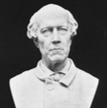
Around 1866, McCormac largely retired from active medical practice but retained his role as visiting physician to the Belfast Lunatic Asylum and continued to publish on a range of medical and intellectual subjects. For all his perceived stubbornness, he was a devoted family man of genuine kindness and tireless energy, who gave himself fully to the care of the sick and the pursuit of knowledge. His son William later described him as 'a man of great mind and of great heart,' a fitting tribute to one of Belfast's most influential physicians. He died 26 May 1886 at his home, 7 Fisherwick Place, and was buried in the city cemetery on the Falls Road. A marble bust, presented by his son Sir William in 1892, is now held by the Ulster Museum.
Further Reading
Andrews, H., 'MacCormack, Henry' Dictionary of Irish Biography, https://www.dib.ie/biography/maccormac-henry-a5142
Clarke, R., The Royal Victoria Hospital, Belfast: A History 1797–1997 (Blackstaff Press, Belfast, 1997).
Fraser, I., 'Father and Son – A Tale of Two Cities, Presidential Address to the Ulster Medical Society' Ulster Medical Journal, Vol. 37(1) (1968), 1–39.
Froggatt, P., 'Henry MacCormac (1800–1886): Physician' Dictionary of Ulster Biography, https://www.newulsterbiography.co.uk/index.php/home/viewPerson/2071
Marshall, R., 'The Open Window, A Paper Read to the British Tuberculosis Association at its Annual meeting in Belfast, June 1948' Ulster Medical Journal, Vol. 17(2) (1948), 188–199.
McCormac, H., Cholera Morbus, A short Outline of its History while in Belfast (Francis Finlay, Belfast, 1832).
McCormac, H., Observations on Spasmodic Cholera, its Origins Nature and Treatment (Hugh Clark, Belfast, 1832).
McCormac, H., Directions for the management of cholera in the absence of medical advice (Belfast, 1849).
Strain, R. W. M., 'The Foundations of Belfast Medicine' Ulster Medical Journal, Vol. 40(1) (1971), 17–42.
Ulster Medical Journal, 'Irish Masters of Medicine' Ulster Medical Journal, Vol. 2(1) (1933), 56–59.
© Dr Nigel Farrell — This work is shared for research and educational purposes. Any reuse, quotation, or reproduction must include appropriate academic attribution to the author. The content may not be redistributed commercially without permission. Full licence details →